
LEVEL 01
Organization
The account that owns members, permissions and the knowledge the organisation has approved.
A useful handoff tells the next person what the team tried, what it decided and what’s still open. That’s what we want the Collab workflow to preserve.
The context model
Every piece of context has a clear home, so it reaches the people who need it and nobody else.
LEVEL 01
The account that owns members, permissions and the knowledge the organisation has approved.
LEVEL 02
Durable homes for engineering work. Context is scoped to the Product or Project it belongs to.
LEVEL 03
Focused spaces where people and approved AI tools work through a problem, a review or a decision.
LEVEL 04
Individual working periods inside a Room, each with its own participants, consent and record.
Three kinds of context
Source material such as code, tickets, documents and session records, kept linked to where it came from.
What a team is exploring now, including open questions, options and draft conclusions.
Knowledge a human Context Approver has reviewed and accepted as something the organisation can rely on.
How the context continues
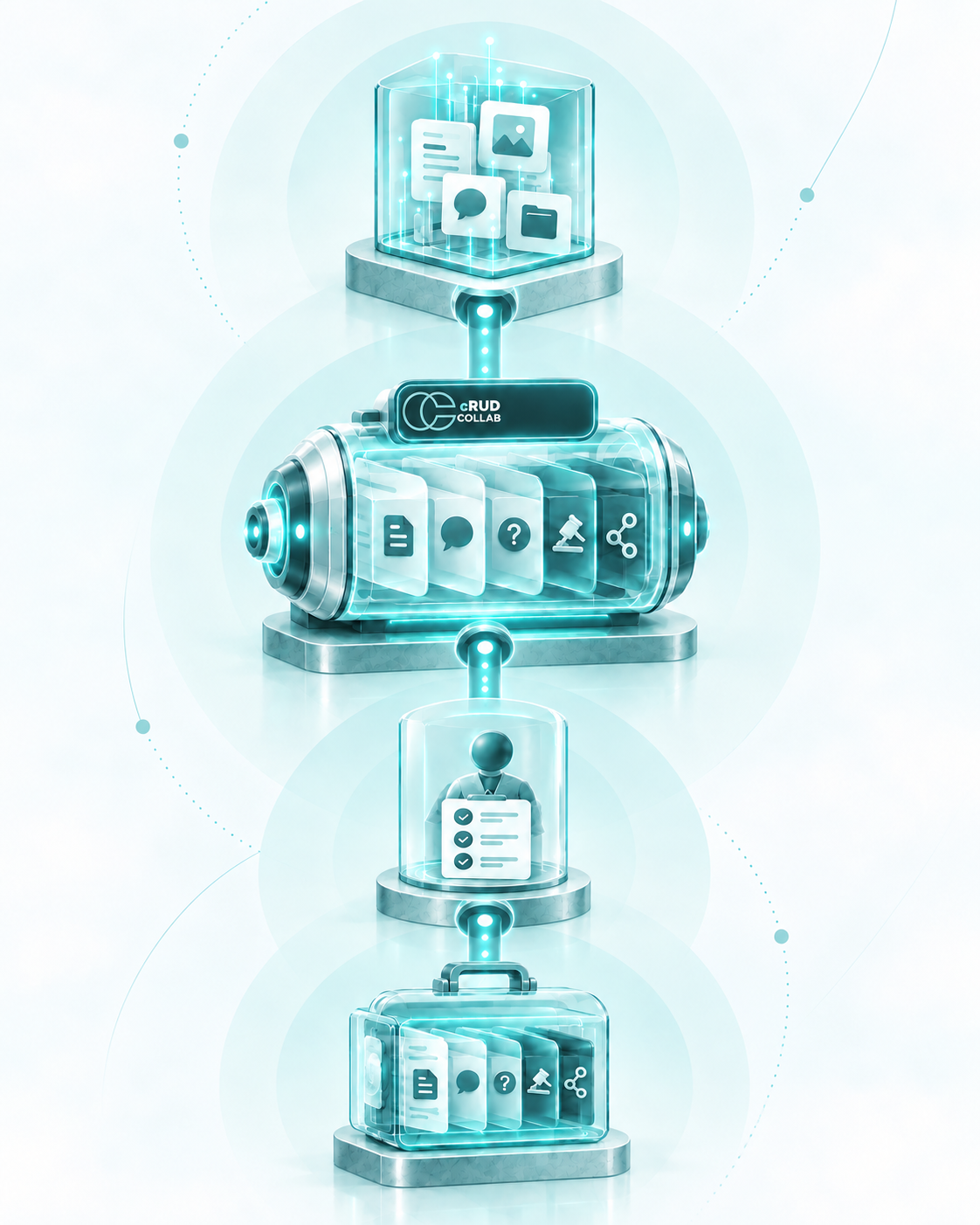
The workflow keeps the problem, evidence, decision and reviewed explanation connected from the first investigation to the next handoff.
Start with the technical problem and a Context Package limited to people who have permission. It contains the relevant code, prior decisions and evidence.
Use a persistent Room or instant Session to investigate assumptions, discuss the code and keep open questions visible.
Connect the chosen action to its source evidence, alternatives, trade-offs and responsible people.
Separate working evidence and proposals from conclusions the team has reviewed and approved.
Let the next person, session or approved tool begin from what the team already knows.
What a useful handoff preserves
State what changed, what remains unresolved and who owns the next action.
Keep the relevant code, tests, observations and alternatives connected to the decision they informed.
Record the access, approval and guardrails that still apply when another person or approved tool returns to the work.
Questions
The cRUD Collab website explains how teams work with it, the principles behind it and the thinking that shaped it.